
From Sap to Syrup: Office of Sustainability Celebrates Historic Yield
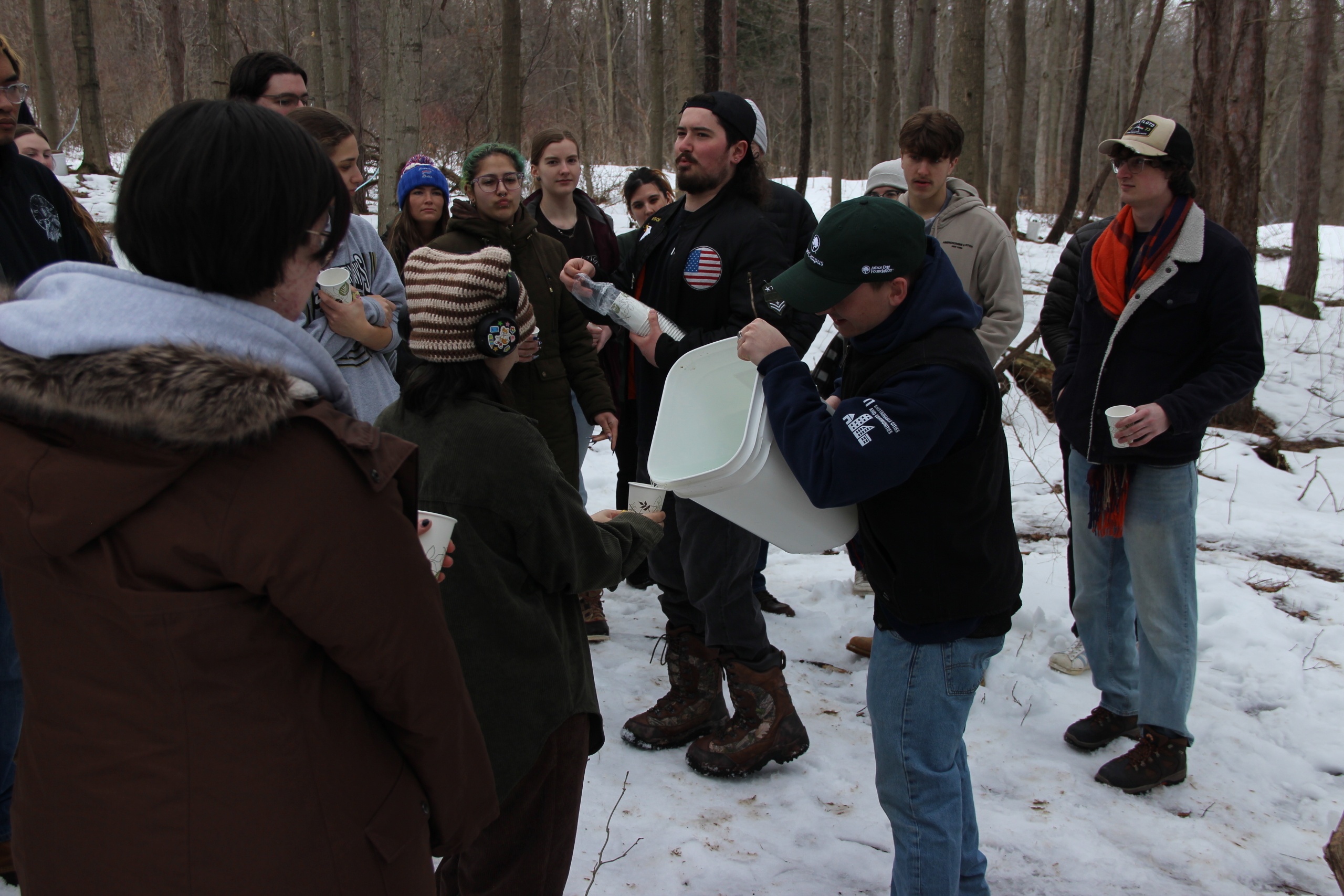
Credit: The Office of Sustainability
OSWEGO, N.Y. — Tapped straight from trees on campus, what started as a socially distanced outdoor activity during COVID-19 has since grown into one of SUNY Oswego’s sweetest sustainability efforts — and this year, it hit a record high.
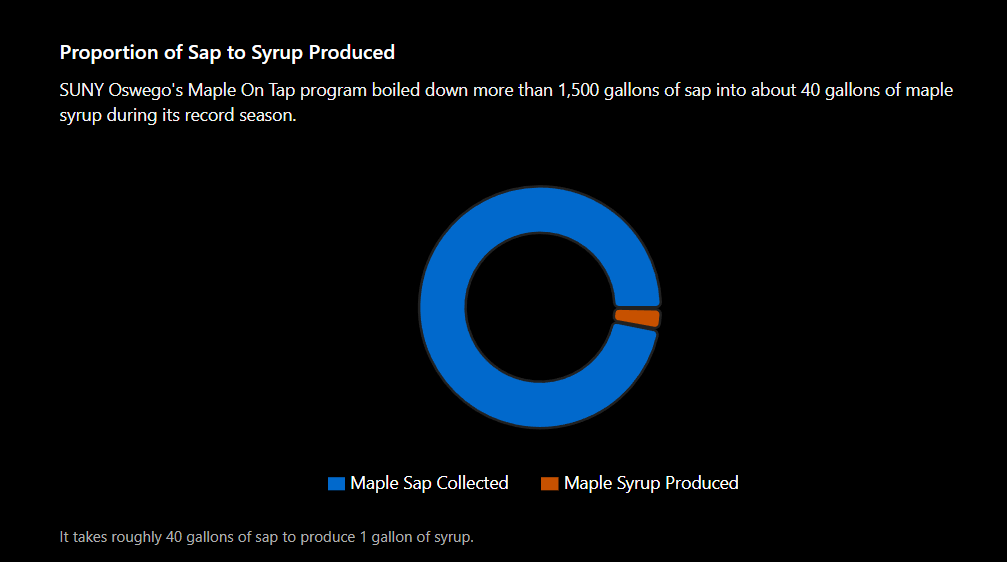
SUNY Oswego’s Maple on Tap program just had its biggest season ever, collecting over 1,500 gallons of maple sap that boiled down to just under 40 gallons of finished syrup and produced over 400 bottles. The program began during the COVID-19 pandemic to encourage students to engage in sustainable practices while maintaining social distancing. Sustainability intern, Jason Napolitano, said that the Office of Sustainability is not entirely sure why yields were so much higher this year, but suspects the on-and-off cold temperatures this winter played a role. Moreover, he believes last year’s yield only resulted in about 1,200 gallons of maple syrup.
The program, run by the Office of Sustainability, launched during the COVID-19 pandemic to engage students in sustainable practices while maintaining social distancing. It centers on a college-owned woodlot informally known as the Sugarbush, located in the Rice Creek area near the WRVO tower, where over 110 sugar maple trees are tapped each late winter. Tapping runs from late February through the end of March. Napolitano also noted that going beyond that window becomes harmful to the trees, which rely on sap for nutrients and development during the growing season. Without those nutrients in the summer, which is when trees grow the most, they can be damaged.
“The Maple on Tap program is run in a very rudimentary way,” Napolitano said. “We go out there, we have buckets, tubes, and spiles, which are the little parts that go into the tree. Those buckets are set up, and the sap is collected on a daily to every other day basis.”
Once collected with the help of auxiliary services, the sap is hauled from the Sugarbush to the currently offline Little Page Dining Hall, where it is boiled down into syrup. It’s no quick process; with a record yield on their hands this year, it took roughly two weeks of daily boiling before it was complete. The ratio of sap to syrup makes the labor clear: it takes roughly 40 gallons of raw sap to produce just one gallon of maple syrup.
The finished syrup comes in three color grades, Golden Delicate, Amber Rich, and Dark Robust, each reflecting when during the season it was harvested. The darker the syrup, the later in the season it was tapped. After bottling and labeling hundreds of bottles, the Office of Sustainability puts the syrup to use across campus. Some is served at the program’s annual pancake breakfast, where students enjoy it over pancakes, sausage, and other breakfast staples. The rest is available at the campus bookstore through the end of the semester.
For those looking to pick some up, an 8-oz. bottle runs around $10, and a 12-oz. bottle goes for $14. With a record yield behind them and plenty of stock still on shelves, Napolitano encourages the campus community to stop by the bookstore and grab a bottle while supplies last.
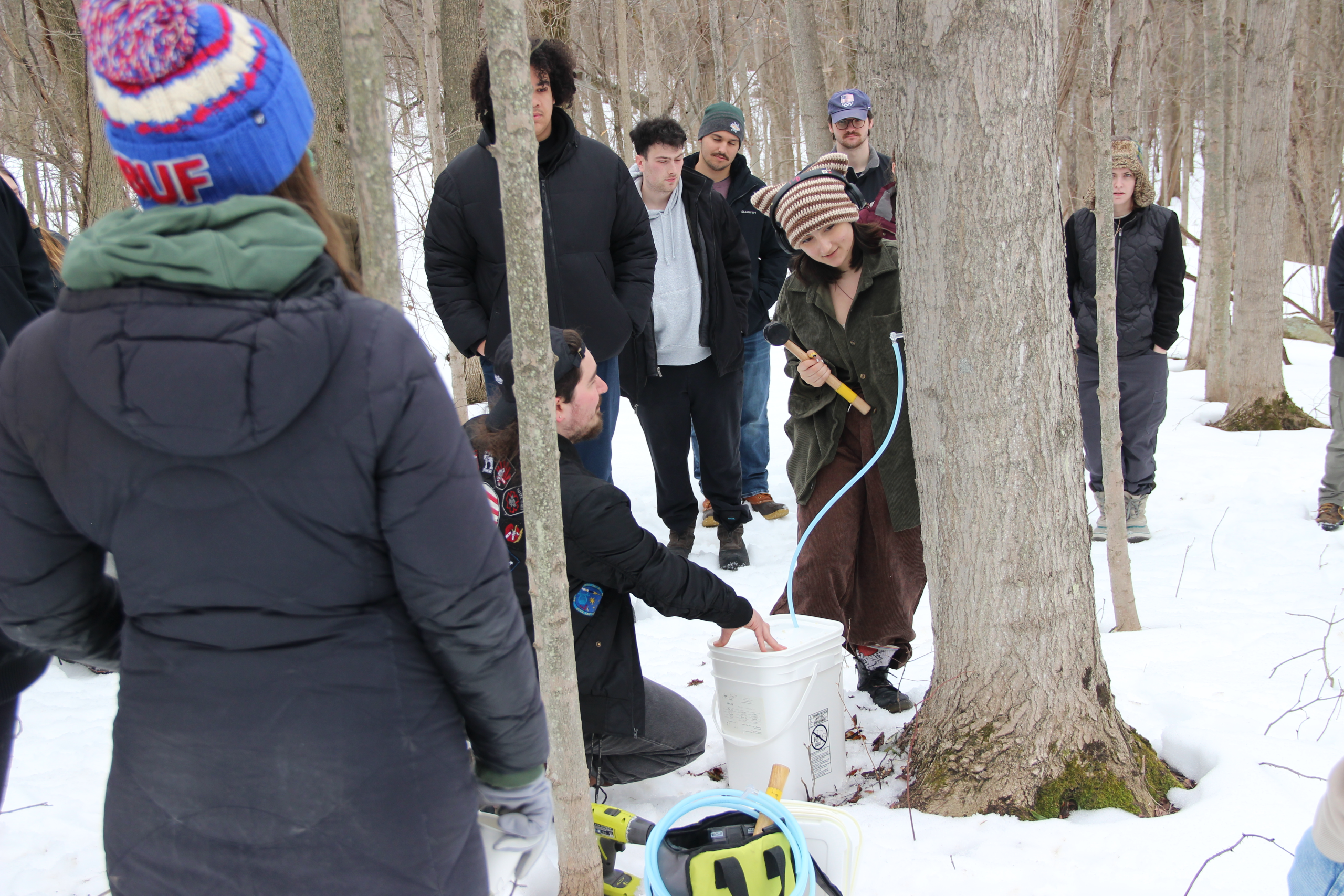
Credit: Office of Sustainability