
How the hiring of Ed Gosek ushered in a golden age of Oswego State hockey
When Edward Gosek took to the helm of Oswego State men’s hockey in 2003, the questions surrounding his hiring had little to do with hockey knowledge or experience; rather, they regarded expectations.
At the time of Gosek’s entry to the Marano Campus Center — the hub for Laker hockey — the team had come off their second-ever appearance in the NCAA Division III national championship, and under former head coach George Roll. Roll compiled a record of 117-73-16 over his six years with the Lakers’ and ended his time in a 2-1 loss to Norwich University in the aforementioned title game.
Despite the loss, a new age of hockey within the shores of Lake Ontario shined bright.
With the Lakers’ reaching national prominence for the first time in 16 years, expectations of continued success from campus and within the locker room had reached levels rarely ever seen for the program. It became clear that replacing Roll meant inheriting a team that expected to win immediately.
Over two decades later, Gosek now leaves Oswego as not just the winningest coach in program history and a national champion, but also as the godfather of one of Division III hockey’s most prestigious programs.
But in 2003, nobody knew any of that yet.
“We knew that there was going to be some change coming,” Mike Lukajic, the leading goal scorer from Gosek’s first season as head coach, said. “But Eddie always had the heartbeat of our team from day one, even as an assistant coach.”
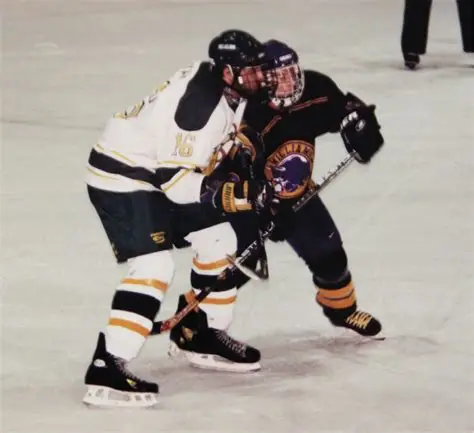
That familiarity would end up becoming the foundation for what players and staff described as a seamless transition.
Unlike many other coaching hires, Gosek was not entering the locker room as an outsider. As an assistant under Roll, he was already playing a major role in recruiting and player development.
“His ascension to head coach was pretty seamless because of the amount of recruiting he had done to help George and the Lakers achieve success in those years leading up to it,” Lukajic said.
He also recalled that Gosek regularly ran practices while Roll was away on recruiting trips, allowing players to become familiar with his coaching style before he eventually took over the program.
The 2003-04 squad returned the majority of its roster from the national championship runner-up team – including then-senior captain Joe Carrabs – which limited the need for major cultural changes.
Despite this, Gosek’s influence quickly became noticeable. His balance of accountability and approachability echoed throughout all sides of campus, and his demand of a strong work ethic alongside success in the classroom became second to none.
“He definitely brought an excellent family atmosphere into the dressing room,” Lukajic said. “He was an excellent mentor.”
That ability to connect with people became one of Gosek’s defining characteristics during his early career. Former Lakers’ assistant coach Rick Pratt – who is also one of Gosek’s lifelong friends – noted his superb off-ice approach.
“Eddie just didn’t coach hockey,” Pratt said. “He coached boys to become men.”
Furthermore, Pratt seemed to have no doubt in his friend when it came to predicting his success as the heart and soul of Oswego hockey.
“When you focus on those little things, put in that extra effort with your players, success follows naturally,” Pratt said.
Gosek’s values quickly translated into good fortune on the ice. Over 23 seasons as head coach, he guided the Lakers to an NCAA Division III national championship victory in 2007 – which remains as the program’s sole national title to this day – along with seven NCAA Frozen Four appearances and five SUNYAC championships.
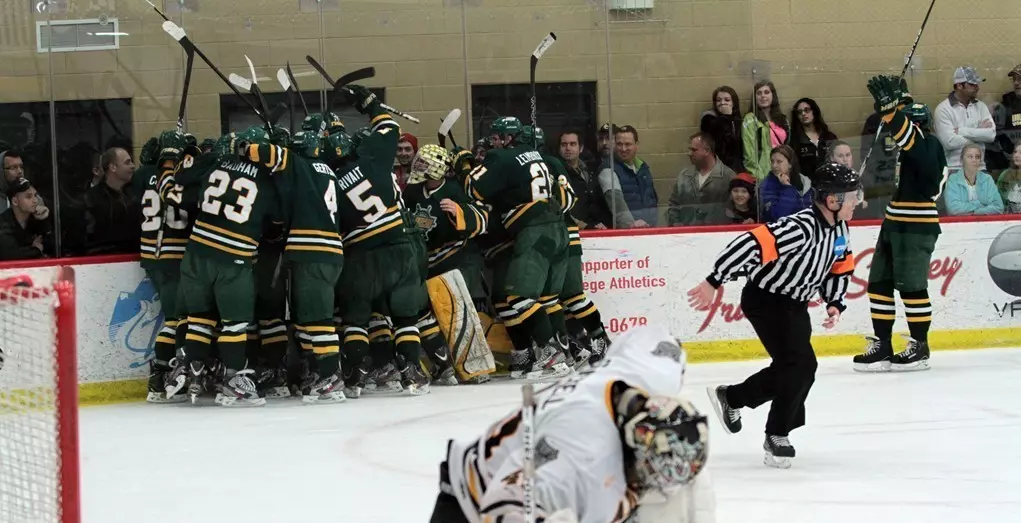
At the same time, though, he emphasized leadership, accountability and academic success over all else.
Lukajic believes that Gosek’s storied success comes from something visible long before the championships and national recognition – his passion.
“It’s astounding that he got to 400 wins,” Lukajic said. “It’s a testament to his passion for the game of hockey.”
Back in 2003, Gosek inherited a program with enormous expectations and a locker room adjusting to change after a national championship appearance. Few people could have predicted what would come next; but inside the program, players were already starting to sense the blueprint of a golden age for Oswego State men’s hockey.